Tissue Research
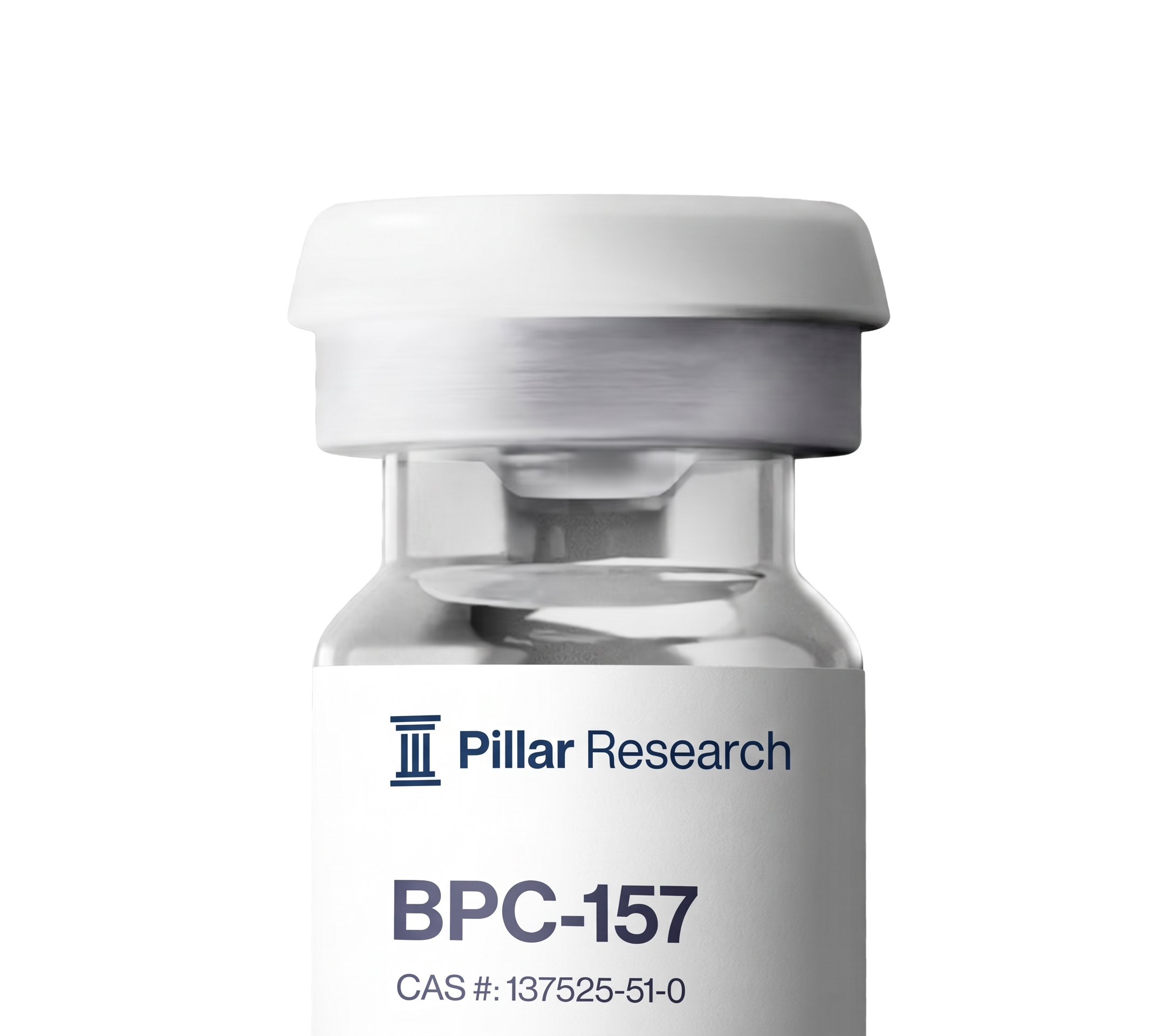
BPC-157 10mg
Buy BPC-157 10mg in Australia - >99.8% HPLC tested with batch-specific COA. Same-day Australian dispatch.
Pentadecapeptide research compound. 15-amino acid sequence derived from gastric protective protein. Investigated in nitric oxide and growth factor signalling.
Institutional pricing
Volume pricing applies automatically at checkout when commerce is live. For bulk institutional orders or custom quantities, contact pillarresearch@pm.me.
BPC-157 10mg
Estimated launch price: $89 AUD
Add to cart is unavailable until launch. Enter your email and we'll notify you the moment BPC-157 10mg is in stock.
No spam. Unsubscribe anytime. For research use only.
Researchers studying BPC-157 frequently study
BPC-157 Overview
BPC-157 is a synthetic pentadecapeptide composed of 15 amino acids. It was originally derived from a naturally occurring protein fragment identified in gastric tissue. Since its discovery in the early 1990s, BPC-157 has been studied extensively in controlled experimental settings for its potential influence on molecular signalling, structural remodelling, and angiogenic processes.
History
The peptide was first synthesised by researchers investigating cytoprotective proteins found in gastric juice. Early experiments focused on its ability to support structural integrity in gastric models. Over time, studies broadened into structural, vascular, and epithelial systems, where BPC-157 consistently demonstrated properties of interest in the context of molecular remodelling and biological resilience.
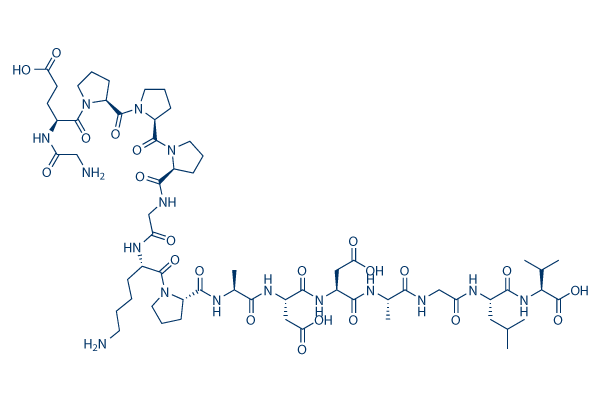
BPC-157 Structure
Research Findings
BPC-157 has been studied in structural, vascular, epithelial, and systemic models, with reports of activity in collagen regulation, extracellular matrix remodelling, angiogenesis, and molecular migration. Research also highlights signalling roles in preclinical systems, supporting molecular integrity and pathway dynamics.
Key Areas of Research:
- •Structural: Collagen, matrix, tendon
- •Vascular: Angiogenesis, nitric oxide, signalling
- •Epithelial: Migration, vessel formation, matrix
- •Systemic: Signalling, viability, pathway dynamics
Together, these findings suggest broad experimental utility for BPC-157 across multiple biological pathways. Its activity in structural, vascular, epithelial, and systemic models provides a foundation for exploring diverse aspects of molecular biology. By influencing processes such as collagen regulation, vascular formation, and molecular signalling, BPC-157 offers a versatile platform for research into pathway dynamics and systemic resilience within experimental settings.
Sikirić P. et al. (2020). Current Pharmaceutical Design - BPC-157 review.
References
References are provided for research context. Pillar Research does not endorse or interpret published findings as therapeutic claims.
BPC-157 10mg - research questions
Common questions for Australian researchers about BPC-157 10mg.
What is BPC-157?
BPC-157 is a synthetic 15-amino-acid peptide derived from Body Protection Compound, a fragment of a gastric protective protein. It is supplied as an investigational research compound for in vitro laboratory research under the RUO framework.
How does BPC-157 work in preclinical models?
The published preclinical literature attributes BPC-157 activity to three pathways: modulation of the nitric oxide system, upregulation of growth-factor receptor expression, and activation of the focal adhesion kinase (FAK)–paxillin pathway. Effects in animal models span tendon, ligament, gastrointestinal, vascular, and central nervous tissue.
What is the BPC-157 amino acid sequence?
Gly-Glu-Pro-Pro-Pro-Gly-Lys-Pro-Ala-Asp-Asp-Ala-Gly-Leu-Val (15 residues, ~1,419 Da).
Are there human clinical trials of BPC-157?
No randomised controlled human trials of BPC-157 have been published. All published efficacy data is preclinical (animal or in vitro). Anecdotal human reports are not clinical evidence.
Is BPC-157 legal in Australia?
BPC-157 is classified as Schedule 4 under the Poisons Standard and is additionally listed in Appendix D, which imposes additional record-keeping and supply controls. It can be lawfully supplied for in vitro research purposes under the RUO framework with the additional controls applicable to Appendix D substances.
How is BPC-157 verified by Pillar Research?
Every batch is independently HPLC and mass spectrometry verified by a third-party Australian laboratory. The batch-specific Certificate of Analysis is downloadable from this page.
How should BPC-157 be stored?
Store lyophilised vials at 2–8 °C, protected from light and moisture, in the original sealed vial. After reconstitution, store at 2–8 °C for short-term use or −20 °C for longer storage. Avoid repeated freeze–thaw cycles.